|
|
| ALA Best Books for Young Adults | 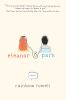 | | Eleanor and Park
by Rainbow Rowell
Kirkus Awkward, prickly teens find deep first love in 1980s Omaha. Eleanor and Park don't meet cute; they meet vexed on the school bus, trapped into sitting together by a dearth of seats and their low social status. Park, the only half-Korean fan of punk and New Wave at their high school, is by no means popular, but he benefits from his family's deep roots in their lower-middle-class neighborhood. Meanwhile, Eleanor's wildly curly red mane and plus-sized frame would make her stand out even if she weren't a new student, having just returned to her family after a year of couch-surfing following being thrown out by her odious drunkard of a stepfather, Richie. Although both teens want only to fade into the background, both stand out physically and sartorially, arming themselves with band T-shirts (Park) and menswear from thrift stores (Eleanor). Despite Eleanor's resolve not to grow attached to anything, and despite their shared hatred for clichs, they fall, by degrees, in love. Through Eleanor and Park's alternating voices, readers glimpse the swoon-inducing, often hilarious aspects of first love, as well as the contrast between Eleanor's survival of grim, abuse-plagued poverty and Park's own imperfect but loving family life. Funny, hopeful, foulmouthed, sexy and tear-jerking, this winning romance will captivate teen and adult readers alike. (Fiction. 14 up)]] Copyright Kirkus Reviews, used with permission. Copyright © Kirkus Reviews, used with permission. School Library Journal Gr 9 Up-In this novel set in the 1980s, teenagers Eleanor and Park are outsiders; Eleanor, because she's new to the neighborhood, and Park, because he's half Asian. Although initially wary of each other, they quickly bond over their love of comics and 1980s alternative music. Eleanor's home life is difficult; her stepfather physically abuses her mother and emotionally abuses Eleanor and her siblings. At school, she is the victim of bullying, which escalates into defacement of her textbooks, her clothes, and crude displays on her locker. Although Park's mother, a Korean immigrant, is initially resistant to the strange girl due to her odd fashion choices, his father invites Eleanor to seek temporary refuge with them from her unstable home life. When Eleanor's stepfather's behavior grows even more menacing, Park assists in her escape, even though it means that they might not see each other again. The friendship between the teens is movingly believable, but the love relationship seems a bit rushed and underdeveloped. The revelation about the person behind the defacement of Eleanor's textbooks is stunning. Although the narrative points of view alternate between Eleanor and Park, the transitions are smooth. Crude language is realistic. Purchase for readers who are drawn to quirky love stories or 1980s pop culture.-Jennifer Schultz, Fauquier County Public Library, Warrenton, VA (c) Copyright 2013. Library Journals LLC, a wholly owned subsidiary of Media Source, Inc. No redistribution permitted. (c) Copyright Library Journals LLC, a wholly owned subsidiary of Media Source, Inc. No redistribution permitted. Publishers Weekly Half-Korean sophomore Park Sheridan is getting through high school by lying low, listening to the Smiths (it's 1986), reading Alan Moore's Watchmen comics, never raising his hand in class, and avoiding the kids he grew up with. Then new girl Eleanor gets on the bus. Tall, with bright red hair and a dress code all her own, she's an instant target. Too nice not to let her sit next to him, Park is alternately resentful and guilty for not being kinder to her. When he realizes she's reading his comics over his shoulder, a silent friendship is born. And slowly, tantalizingly, something more. Adult author Rowell (Attachments), making her YA debut, has a gift for showing what Eleanor and Park, who tell the story in alternating segments, like and admire about each other. Their love is believable and thrilling, but it isn't simple: Eleanor's family is broke, and her stepfather abuses her mother. When the situation turns dangerous, Rowell keeps things surprising, and the solution-imperfect but believable-maintains the novel's delicate balance of light and dark. Ages 13-up. Agent: Christopher Schelling, Selectric Artists. (Mar.) (c) Copyright PWxyz, LLC. All rights reserved. (c) Copyright PWxyz, LLC. All rights reserved Horn Book It's the start of a new school year in 1986 Omaha when sophomores Eleanor and Park meet on the bus. She's an ostracized "big girl"; he's a skinny half-Korean townie who tries to stay out of the spotlight. Their slowly evolving relationship is life-changing for them both. Rowell imbues the novel with rich character development for a heart-wrenching portrayal of imperfect but unforgettable love (c) Copyright 2013. The Horn Book, Inc., a wholly owned subsidiary of Media Source, Inc. No redistribution permitted. (c) Copyright The Horn Book, Inc., a wholly owned subsidiary of Media Source, Inc. No redistribution permitted. Book list *Starred Review* Right from the start of this tender debut, readers can almost hear the clock winding down on Eleanor and Park. After a less than auspicious start, the pair quietly builds a relationship while riding the bus to school every day, wordlessly sharing comics and eventually music on the commute. Their worlds couldn't be more different. Park's family is idyllic: his Vietnam vet father and Korean immigrant mother are genuinely loving. Meanwhile, Eleanor and her younger siblings live in poverty under the constant threat of Richie, their abusive and controlling stepfather, while their mother inexplicably caters to his whims. The couple's personal battles are also dark mirror images. Park struggles with the realities of falling for the school outcast; in one of the more subtle explorations of race and the other in recent YA fiction, he clashes with his father over the definition of manhood. Eleanor's fight is much more external, learning to trust her feelings about Park and navigating the sexual threat in Richie's watchful gaze. In rapidly alternating narrative voices, Eleanor and Park try to express their all-consuming love. You make me feel like a cannibal, Eleanor says. The pure, fear-laced, yet steadily maturing relationship they develop is urgent, moving, and, of course, heartbreaking, too.--Jones, Courtney Copyright 2010 Booklist From Booklist, Copyright © American Library Association. Used with permission. |
| ALA Notable Books for Children | 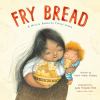 | | Fry Bread: A Native American Family Story
by Kevin Noble Maillard
Horn Book More than just food, ‘Fry bread is time...Fry bread is art...Fry bread is history.’ An intergenerational group of Native American friends and family makes fry bread, a common Native food staple as varied as the people who make it; this diversity is reflected in Martinez-Neal's warmhearted illustrations. Back matter explains how fry bread became a part of many Native Americans' diet after being forced from their land and given limited U.S. government rations. Recipe appended. Bib. (c) Copyright 2021. The Horn Book, Inc., a wholly owned subsidiary of Media Source, Inc. No redistribution permitted. (c) Copyright The Horn Book, Inc., a wholly owned subsidiary of Media Source, Inc. No redistribution permitted. Publishers Weekly Using brief statements that begin “fry bread is,” Maillard, who is a member of the Mekusukey band of the Seminole Nation tribe, creates a powerful meditation on the food as “a cycle of heritage and fortune.” In each spread, descriptions of fry bread range from the experiential (flavor, sound) to the more conceptual (nation, place). Bolstering the bold statements, spare poems emphasize fry bread in terms of provenance (“Fry bread is history/ The long walk, the stolen land”), culture (“Fry bread is art/ Sculpture, landscape, portrait”), and community (“Fry bread is time/ On weekdays and holidays/ Supper or dinner/ Powwows and festivals”). In blues and browns with bright highlights, Martinez-Neal’s wispy art features a diverse group of six children carrying ingredients and learning about each statement. A fry bread recipe concludes the book, and an author’s note offers vital, detailed context about this varied dish and its complex history (“The story of fry bread is the story of American Indians”). Ages 3–6. (Oct.) (c) Copyright PWxyz, LLC. All rights reserved School Library Journal PreS-Gr 2—Millard explores the rich and varied cultures of modern Native Americans through the lens of fry bread. Each section opens with "Fry Bread" in red capital letters, followed by a short lyrical verses tying the food to different aspects of Indigenous life. For example, the verse for "Fry Bread Is Time" reads "On weekdays and holidays/Supper or dinner/Powwows and festivals/Moments together/With family and friends." The verse for "Fry Bread Is History" explains, "The long walk, the stolen land/Strangers in our own world/With unknown food/We made new recipes/From what we had." Double-page color sketches in muted tones show the diversity of tribal members, with thoughtful details. As elders tell about the Trail of Tears, dark birds turn into sad people in the background. The author, a member of the Seminole Nation, shares his family recipe for fry bread and provides an extensive and thoughtful Author's Note, providing more information on each topic covered and occasionally calling out special details in the drawings. These notes deal with and dispel many stereotypes associated with Native peoples, while providing historical and contemporary facts. VERDICT This warm and charming book shows and affirms Native lives. The informational text and expressive drawings give it broad appeal, making it a first purchase for all libraries.—Tamara Saarinen, Pierce County Library, WA (c) Copyright Library Journals LLC, a wholly owned subsidiary of Media Source, Inc. No redistribution permitted. Book list Fry Bread celebrates the thing itself and much, much more. The simplicity of the ingredients, readers learn, belies the quality of the cooking process, the proximity with people, the historical tradition, the geography for fry bread is everything. Maillard and Martinez-Neal bring depth, detail, and whimsy to this Native American food story, with text and illustrations depicting the diversity of indigenous peoples, the role of continuity between generations, and the adaptation over time of people, place, and tradition. Fry bread becomes a metaphor for resilience, born ironically, as Maillard explains, from the most basic of government-issued ingredients. Martinez-Neal's (Alma and How She Got Her Name, 2018) illustrations are meant to be relished, lingered over. Smiling, round-faced children are shown playing together and learning from elders, and details include traditional Seminole textile designs, dollmaking, and pottery styles. A particularly striking spread depicts a wall etched with the names of hundreds of Native American nations, explicitly countering perceptions about the extinction or invisibility of indigenous peoples. A lengthy author's note provides valuable context and history, as well as the author's personal evolution into the fry bread lady with his own modern take on the recipe. This lovely, important book pairs well with Linda Sue Park's Bee-bim Bop! (2005) and Hot, Hot Roti for Dada-ji (2011) by F. Zia for fun culinary, familial themes.--Amina Chaudhri Copyright 2010 Booklist From Booklist, Copyright © American Library Association. Used with permission. Kirkus A bright picture book invites kids to cook with a Native American grandma.Kids of all races carry flour, salt, baking powder, and other supplies into the kitchen to make dough for fry bread. Flour dusts the counter as oil sizzles on the stove. Veggies, beans, and honey make up the list of toppings, and when the meal is ready, everyone is invited to join the feast. Community love is depicted in this book as its characters gather on Indigenous land across the continentindoors, outdoors, while making art or gazing at the night sky. This is about more than food, referencing cultural issues such as the history of displacement, starvation, and the struggle to survive, albeit in subtle ways appropriate for young children. With buoyant, heartfelt illustrations that show the diversity in Native America, the book tells the story of a post-colonial food, a shared tradition across the North American continent. Broken down into headings that celebrate what fry bread is, this story reaches readers both young and old thanks to the author's note at the back of the book that dives into the social ways, foodways, and politics of America's 573 recognized tribes. Through this topic that includes the diversity of so many Native peoples in a single story, Maillard (Mekusukey Seminole) promotes unity and familiarity among nations.Fry bread is much more than food, as this book amply demonstrates. (recipe) (Picture book. 3-8) Copyright Kirkus Reviews, used with permission. Copyright © Kirkus Reviews, used with permission. |
| Caldecott Medal Winners | 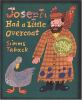 | | Joseph Had a Little Overcoat
by Simms Taback
Publishers Weekly
: As in his Caldecott Honor book, There Was an Old Lady Who Swallowed a Fly, Taback's inventive use of die-cut pages shows off his signature artwork, here newly created for his 1977 adaptation of a Yiddish folk song. This diverting, sequential story unravels as swiftly as the threads of Joseph's well-loved, patch-covered plaid coat. A flip of the page allows children to peek through to subsequent spreads as Joseph's tailoring produces items of decreasing size. The author puts a droll spin on his narrative when Joseph loses the last remnant of the coat--a button--and decides to make a book about it. "Which shows... you can always make something out of nothing," writes Taback, who wryly slips himself into his story by depicting Joseph creating a dummy for the book that readers are holding. Still, it's the bustling mixed-media artwork, highlighted by the strategically placed die-cuts, that steals the show. Taback works into his folk art a menagerie of wide-eyed animals witnessing the overcoat's transformation, miniature photographs superimposed on paintings and some clever asides reproduced in small print (a wall hanging declares, "Better to have an ugly patch than a beautiful hole"; a newspaper headline announces, "Fiddler on Roof Falls off Roof"). With its effective repetition and an abundance of visual humor, this is tailor-made for reading aloud. All ages. (Oct.) Copyright 1999 Cahners Business Information, Inc. Distributed by Syndetic Solutions Inc. Terms
School Library Journal
: Pre-Gr 3-A book bursting at the seams with ingenuity and creative spirit. When Joseph's overcoat becomes "old and worn," he snips off the patches and turns it into a jacket. When his jacket is beyond repair, he makes a vest. Joseph recycles his garments until he has nothing left. But by trading in his scissors for a pen and paintbrush he creates a story, showing "you can always make something out of nothing." Clever die-cut holes provide clues as to what Joseph will make next: windowpanes in one scene become a scarf upon turning the page. Striking gouache, watercolor, and collage illustrations are chock-full of witty details-letters to read, proverbs on the walls, even a fiddler on the roof. Taback adapted this tale from a Yiddish folk song and the music and English lyrics are appended. The rhythm and repetition make it a perfect storytime read-aloud.-Linda Ludke, London Public Library, Ontario, Canada Copyright 2000 Cahners Business Information, Inc. Distributed by Syndetic Solutions Inc. Terms
|
| Horn Book Picture Book Awards | 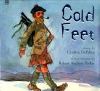 | | Cold Feet
by Cynthia DeFelice
Publishers Weekly
: DeFelice and Parker (previously paired for The Dancing Skeleton) join forces again, this time to polish up a Scottish ghost story. When ragged, penniless Willie McPhee, "the finest bagpipe player in all of Scotland," stumbles across a dead man in the forest one snowy night, he helps himself to the boots. Unfortunately the man's feet come with them, snapping off when Willie tugs on the frozen legs. But "a poor man must be practical, after all," and Willie carries off the boots (and feet). Later he decides to play a trick on a heartless farmer who grudgingly sends him to the barn when he asks for shelter: Willie arranges the now-thawed feet to make it appear that their cow has eaten him. The horrified farmer and his wife quickly bury the evidence, but when Willie comes out of hiding and pipes a farewell tune atop the "wee small grave," they flee, thinking him a ghost. In the end, a bona fide ghost does appearDto Willie. DeFelice pitches this deliciously eerie tale in the kind of cadence and language that make for a grand read-aloud (e.g., the near-shoeless Willie goes "flip-flap, flip-flap, flip-flap down the road"), and she neatly preserves the regional flavor ("Och! They were fine-looking boots, they were!"). Beautifully set off by the understated book design, Parker's watercolors rank with his finest. The blotted impressionistic colors and scrawled lines are both edgy and amusing, while the cool gray tones create an appropriately chilly backdrop for the spooky antics. Ages 5-8. Copyright 2000 Cahners Business Information, Inc. Distributed by Syndetic Solutions Inc. Terms
School Library Journal
: Gr 3-6-This ghost story for the strong of stomach features a bagpiper by the name of Willie McPhee. Hard times have forced him to seek a place where people can afford his entertainment. Months pass. His boots are "more holes than leather." Alone, hungry, and tired, he trips on what he soon realizes is the frozen body of a man whose boots are too fine to leave behind. He can't remove them until he drops the man's leg, which then snaps in two. Carrying the boots (and feet within them) tied around his neck, Willie seeks shelter on a farm, only to be told by the inhospitable owner to sleep in the barn with the cow. In the morning, Willie plays a trick on his mean-spirited host and places one foot in the cow's mouth, the other beside her. The shocked farmer quickly buries the feet, and when Willie reappears to play his pipes on the grave, the man and his wife take off, never to be seen again. Later that night, as Willie enjoys the cozy warmth of the farmhouse, a footless stranger appears at the door. So ends the tale. DeFelice's language, tone, and pacing capture the essence of the oral tradition while Parker's dark and stylized watercolor and pen-and-ink illustrations reflect the playfully somber mood of the story. This is a yarn meant to amuse as well as frighten, and it succeeds at both.-Alicia Eames, New York City Public Schools Copyright 2000 Cahners Business Information, Inc. Distributed by Syndetic Solutions Inc. Terms
|
| New York Times Bestsellers | 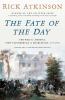 | | The Fate Of The Day
by Rick Atkinson
Publishers Weekly From chaotic bloodshed emerges a coherent struggle for freedom in this sweeping second volume of Pulitzer winner Atkinson’s Revolution Trilogy (after The British Are Coming). He recaps the war’s muddled middle years, focusing on three inept British campaigns: Gen. John Burgoyne’s 1777 expedition down the Hudson River from Canada, which ended with a humiliating surrender at Saratoga that emboldened the French to ally with America; Gen. William Howe’s 1778 defeat of George Washington’s Continental Army and occupation of Philadelphia, which the British then fecklessly abandoned; and British efforts to capture Savannah and Charleston in futile hopes of galvanizing Loyalist support. Atkinson also tracks international developments, following Benjamin Franklin’s sly diplomacy in Paris and escalating tension between Britain and France. Through vivid battle scenes (“Ghostly, muddy figures illuminated by British muzzle flashes... began climbing... their bayonets pricking the night”) and complex portraits of key figures (from Washington—a paragon of honor but also a consummate spin-doctor—to neurotic British commander-in-chief Henry Clinton, who repeatedly begged to be relieved of command), Atkinson distills a larger interpretation: though the British were winning more battles, they were losing the ideological war, partly due to the Patriots’ brutal suppression of Loyalists and America’s already robust tradition of self-governance, but also because the fight for liberty inspired passionate solidarity abroad. Epic in scale but rich in detail, this captures the drama and world-historical significance of the revolution. (Apr.) (c) Copyright PWxyz, LLC. All rights reserved Book list In The Fate of the Day, the second volume of a trilogy covering the fledgling nation’s quest for independence, acclaimed author Atkinson (The British Are Coming, 2019) provides a riveting narrative covering the middle years of the American Revolution. In typical Atkinson fashion, this work provides a vast amount of substance supported by an equal amount of research to provide an exhaustive chronicle of the years that helped shape the Revolution. The American-British fight for the Americas was influenced by a wide array of characters often overlooked in the vast amount of historical works, including personalities like Charles Gravier, Count of Vergennes; John Montagu, the fourth Earl of Sandwich; and scholar Edward Gibbon, coupled with the likes of better-known participants like Lafayette, Washington, Howe, and Franklin. This work is not only an entertaining story, but more importantly, a comprehensive addition to a well-studied period of history. For readers of American history, this is a must-have volume to complete an already vast library covering the fight for democracy some 250 years in the past. From Booklist, Copyright © American Library Association. Used with permission. Kirkus The Revolutionary War enters its most desperate phase in the second volume of Atkinson’s trilogy. To read this book by prolific military historian Atkinson is to see the Revolutionary War as both a civil war—loyalists against rebels, with a sizable number of uncommitted colonists in between—and an international war involving numerous European powers. Indeed, Atkinson’s book opens in France, where two nobles, Baron Johann de Kalb and Gilbert du Motier, a.k.a. the Marquis de Lafayette, are surreptitiously making their way to a boat to America, where both have been recruited to join the Continental Army at high rank. Atkinson then shifts the scene to the frontier: to Ticonderoga, where Continentals were routed twice, and to a farm settlement where British-allied Indians infamously scalped a young woman—ironically, engaged to a loyalist officer—while she was still alive, whipping up a furiously vengeful response: “Newspaper accounts of the atrocity, published over the coming weeks…fueled American contempt for the British and rage at the Indians.” Atkinson thoughtfully appraises some of the principal figures in the conflict, including British General John Burgoyne, immensely popular with his troops and insistent on recruiting Irish Catholics, “traditionally excluded from the army.” (Toward the close of his book, Atkinson writes of anti-Catholic riots in London that in the end were quashed with military force.) As for George Washington, having survived disastrous defeats and the hard winter at Valley Forge, Atkinson concludes that “in an era of great men, he already was in the front rank.” Between vivid accounts of engagements such as the crushing Continental defeat at Charleston, Atkinson looks at the practical facts of the war, including the heavy casualty rate the British suffered in trying to retain their colonies for an adamant King George III—for, as Atkinson rightly asks, “Without America, would Britain even have an empire?” As ever with Atkinson, an exemplary work of narrative history. Copyright © Kirkus Reviews, used with permission. Copyright © Kirkus Reviews, used with permission. |
| Newbery Medal Winners | 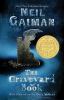 | | The Graveyard Book
by Neil Gaiman
Publishers Weekly
: Starred Review. A lavish middle-grade novel, Gaiman's first since Coraline, this gothic fantasy almost lives up to its extravagant advance billing. The opening is enthralling: There was a hand in the darkness, and it held a knife. Evading the murderer who kills the rest of his family, a child roughly 18 months old climbs out of his crib, bumps his bottom down a steep stairway, walks out the open door and crosses the street into the cemetery opposite, where ghosts take him in. What mystery/horror/suspense reader could stop here, especially with Gaiman's talent for storytelling? The author riffs on the Jungle Book, folklore, nursery rhymes and history; he tosses in werewolves and hints at vampires—and he makes these figures seem like metaphors for transitions in childhood and youth. As the boy, called Nobody or Bod, grows up, the killer still stalking him, there are slack moments and some repetition—not enough to spoil a reader's pleasure, but noticeable all the same. When the chilling moments do come, they are as genuinely frightening as only Gaiman can make them, and redeem any shortcomings. Ages 10–up. (Oct.) Copyright © Reed Business Information, a division of Reed Elsevier Inc. All rights reserved. Distributed by Syndetic Solutions Inc. Terms
School Library Journal
: Gr 5–8—Somewhere in contemporary Britain, "the man Jack" uses his razor-sharp knife to murder a family, but the youngest, a toddler, slips away. The boy ends up in a graveyard, where the ghostly inhabitants adopt him to keep him safe. Nobody Owens, so named because he "looks like nobody but himself," grows up among a multigenerational cast of characters from different historical periods that includes matronly Mistress Owens; ancient Roman Caius Pompeius; an opinionated young witch; a melodramatic hack poet; and Bod's beloved mentor and guardian, Silas, who is neither living nor dead and has secrets of his own. As he grows up, Bod has a series of adventures, both in and out of the graveyard, and the threat of the man Jack who continues to hunt for him is ever present. Bod's love for his graveyard family and vice versa provide the emotional center, amid suspense, spot-on humor, and delightful scene-setting. The child Bod's behavior is occasionally too precocious to be believed, and a series of puns on the name Jack render the villain a bit less frightening than he should be, though only momentarily. Aside from these small flaws, however, Gaiman has created a rich, surprising, and sometimes disturbing tale of dreams, ghouls, murderers, trickery, and family.—Megan Honig, New York Public Library Copyright © Reed Business Information, a division of Reed Elsevier Inc. All rights reserved. Distributed by Syndetic Solutions Inc. Terms
|
| Oprah's Book Club | 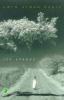 | | Icy Sparks
by Gwyn Hyman Rubio
Library Journal: Kentucky writer Rubio's big-hearted first novel features Icy Sparks, a brave and lovable child with Tourette Syndrome. Her involuntary twitches, eye poppings, and repetitions isolate her from the life of her Appalachian community. She is hospitalized for several months and finally receives the correct diagnosis, and under the care of a kindly doctor she learns techniques to reduce the severity of her symptoms. Her loving grandparents and the friendship of the hugely fat Miss Emily, also isolated by her difference, sustain her for five years. During those years Miss Emily teaches her what she will need to know for college. By the end of those years Icy has learned to manage her disability and has used her pain and loneliness to grow into a wonderful young woman. In refusing defeat, she wins the love and respect of the reader. For all collections where there are tender hearts. Judith Kicinski, Sarah Lawrence Coll. Lib., Bronxville, NY Distributed by Syndetic Solutions Inc. Terms
Publishers Weekly: The diagnosis of Tourette's Syndrome isn't mentioned until the last pages of Rubio's sensitive portrayal of a young girl with the disease. Instead, Rubio lets Icy Sparks tell her own story of growing up during the 1950s in a small Kentucky town where her uncontrollable outbursts make her an object of fright and scorn. "The Saturday after my [10th] birthday, the eye blinking and poppings began.... I could feel little invisible rubber bands fastened to my eyelids, pulled tight through my brain and attached to the back of my head," says Icy, who thinks of herself as the "frog child from Icy Creek." Orphaned and cared for by her loving grandparents, Icy weathers the taunts of a mean schoolteacher and, later, a crush on a boy that ends in disappointment. But she also finds real friendship with the enormously fat Miss Emily, who offers kindness and camaraderie. Rubio captures Icy's feelings of isolation and brings poignancy and drama to Icy's childhood experiences, to her temporary confinement in a mental institution and to her reluctant introduction--thanks to Miss Emily and Icy's grandmother--to the Pentecostal church through which she discovers her singing talent. If Rubio sometimes loses track of Icy's voice, indulges in unconvincing magical realism and takes unearned poetic license with the speech of her Appalachian grandparents ("`Your skin was as cold as fresh springwater, slippery and strangely soothing to touch'"), her first novel is remarkable for its often funny portrayal of a child's fears, loves and struggles with an affliction she doesn't know isn't her fault. Agent, Susan Golomb; editor, Jane von Mehren. Copyright 1998 Cahners Business Information, Inc. Distributed by Syndetic Solutions Inc. Terms
|
|

